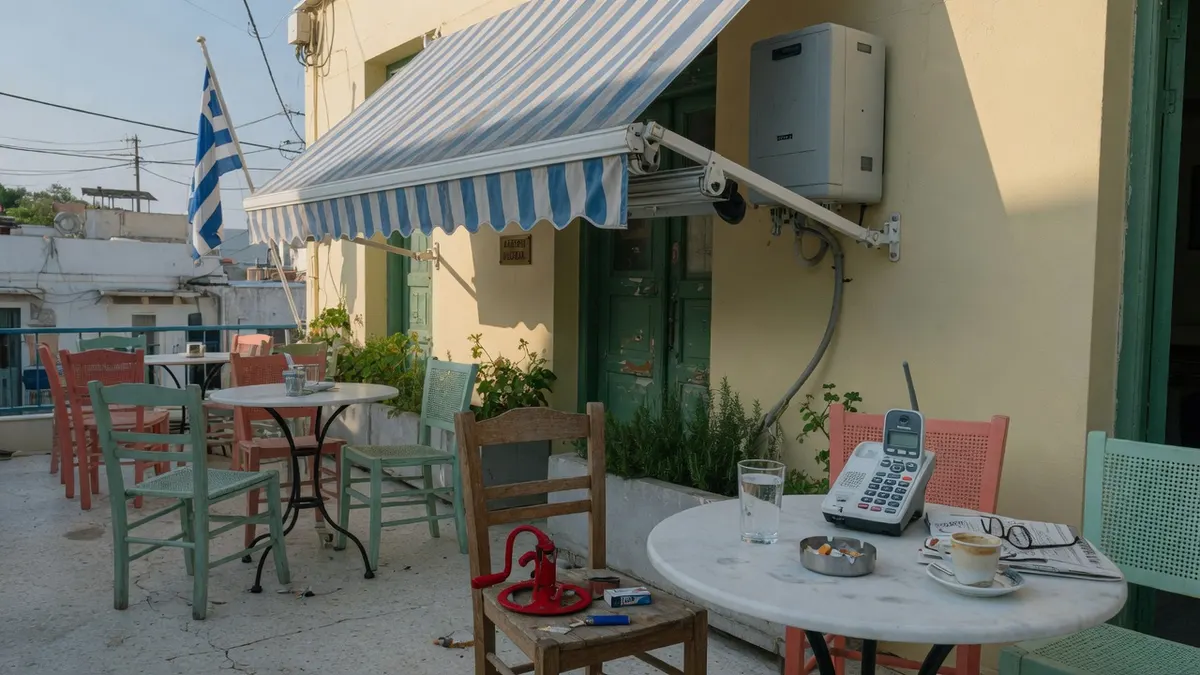
Multilingual phone reception for awnings and pergolas
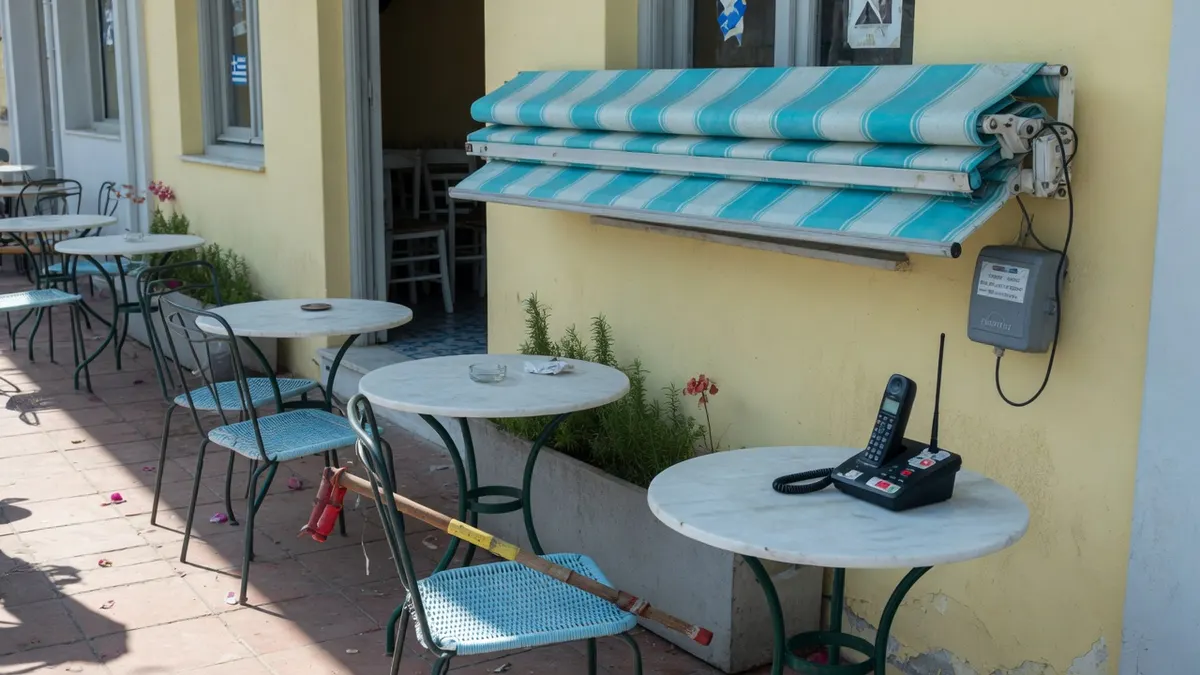
Quick summary
- A published Greek number already takes English, German, French and Italian in the same April week.
- The assistant hears the language on the first sentence and continues in it. It covers 70+ languages, and it can switch if they mix.
- Measure-up or sensor is still the first question. A name in English does not tell you which job it is.
- A Saturday demand in German is still a Saturday demand. Fluency does not let it book an install from a photo.
- The spoken rule does not change: the quote comes after the tape. Saturday's install is not booked from a picture.
- The confirmation SMS goes out in the language of the call, with motor or crank and to clear the chairs.
TL;DR
You are on a terrace with the tape when a café rings in English about Saturday, or a hotel rings in German about ten balconies. They want a measure-up, or a look at a wind sensor. They will not wait for the colleague who is comfortable in English to let go of the cassette. An assistant answers in the language it hears — 70+ languages, and it can switch if they mix Greek and English on the same call. It asks motor or crank first, takes the address, and refuses anything that sounds like a weekend install from a photo. It will not read a Greek fabric card aloud and tell them what it costs.
Key takeaways
- Leave language detection on. Pinning the line to Greek is how the 09:40 English café never reaches you.
- Put the measure-up-or-sensor question in every language you actually hear, not only the two you staff.
- Write the callback sentence once and never vary it: no price and no Saturday from a photo.
- Do not let it explain a Greek fabric card, pick motor or crank, or book an install because they asked in English.
- Send the SMS in the language of the conversation, with motor or crank and to clear the chairs.
- Read the first multilingual transcripts with the shop. That is where a soft Saturday creeps in.
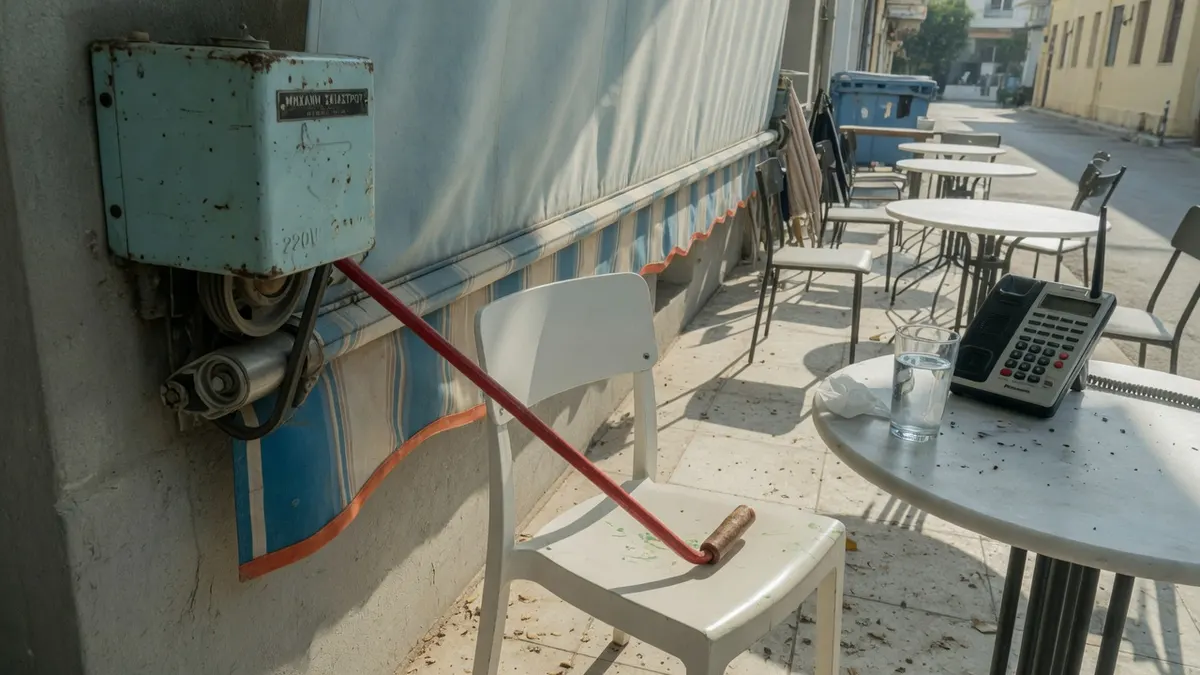
The first word is not Greek
A café says “do you speak English?” You have the tape on a cassette. The person who would have taken the English call is cutting fabric. You cannot pick up. They will not wait.
The number they dialled is the one on the van, the workshop door, and the listing a hotel forwarded. Those pages are in Greek. The caller is not. In a Greek shop that is English, German, French and Italian in the same April week, and often more than one of those before lunch.
Thirty seconds of hold, or a promise that someone who speaks English will ring back, is enough. They hang up and dial the next shop. A terrace that opens on Saturday will not wait. A hotel with ten balconies will not wait.
Measure-up or sensor still comes first
A name in English does not tell you the job. Marco Rossi on a terrace might be a measure-up, a wind sensor, torn fabric, or a voice asking for Saturday from a photo. The assistant asks the split in the language it heard. Then motor or crank. Then the address.
If it jumps to a morning because the English sounded urgent, it will put a weekend demand into a sensor slot and leave the café without a tape. Urgency is not a type.
A mixed call — street name in Greek, the rest in English — is still one split. The assistant can switch. The Saturday sentence stays in both languages.
Fluency is not a fabric card
The tempting help is to read the card. They cannot read Greek. They only want a round figure. They only want Saturday so the chairs can go out.
That help is a quote, and a date the shop then owns. A price in fluent German is still a price from a photo. A Saturday in English is still an install before the tape. The assistant refuses in the language of the call. The tape goes on the wall.
Do not put a bilingual price list in the notes. It will read the list out, twice.
SMS, measure-ups, and the chairs
The confirmation must follow the call. An English café who receives a Greek SMS about a measure-up will miss the morning and decide the shop cannot handle them. Set the language of the SMS to the language of the conversation.
A measure-up in English is not a promise that the person with the tape speaks English. Mark who can. The assistant offers times from that diary. If nobody can, it says the measure-up is in Greek and takes the booking anyway, or takes a callback. It does not invent a translator.
Clearing the chairs is still clearing the chairs. Write that line in the languages you actually hear. An empty terrace is not a courtesy. A measure-up with the tables out is a morning of moving furniture, in any language.
What you set first
Leave detection on. Write the measure-up-or-sensor question and the Saturday sentence once, and keep them in every language the shop hears. Do not pin the line to Greek because the van is Greek.
Read the first multilingual transcripts with the shop. That is where “we can do the weekend if you confirm now” creeps in, in English, because it sounded helpful.
Tag the language on the note. A week of English terraces from the same hotel is a staffing fact, not a curiosity.
Rates live on the pricing section of the home page. They are not repeated here.
April wind in two languages
Arms that will not retract are a look, in any language. Fabric over tables is a flag. The assistant still does not invent an arrival. A hotel manager who rings in Italian about cloth on balconies is still a transfer if people are underneath. Fluency does not make the van closer.
A café who rings in English about a new motor in the same hour is still a measure-up. Do not let the wind diary swallow the terrace.
If they switch mid-call — English for Saturday, Greek for the street — keep both. The transcript should show the switch. A summary that drops the address because the street was in Greek is a summary you cannot put a tape on.
April is when the languages arrive with the chairs
The English calls are not an August courtesy. They are 09:40 on a terrace, 18:00 after a hotel meeting, Sunday after a windy night. If you only test the greeting at 15:00 in Greek, you have not tested this page.
Measure unanswered calls that opened in another language as their own column. A morning that looks quiet in Greek can still have lost the café.
Do not let a bilingual cutter in the workshop become the excuse for turning detection off. That cutter is on the cloth. They are not on the published number.
What the shop sees afterwards
A transcript in the caller’s words, a summary, the language, the split, motor or crank, the address. That is enough to call back. It is not enough to quote a wall. It must never be enough to book Saturday.
If the caller asked for a weekend install in English, the note says Saturday-refused, in Greek for the shop if you want, with the caller’s words attached. Do not translate the refusal into a softer Greek sentence that someone might read as permission to promise the weekend.
A new measure-up booked in German still needs the chairs line in German. Check the first twenty SMS. That is where a Greek template leaks onto an English call.
The value of a new terrace is yours to put in. The worked example above is arithmetic on stated assumptions. A shop that lives on cafés with foreign owners and a shop that lives on Greek balconies are not the same April. Put your own figure in.
Whoever takes the first English measure-up often takes the order. That is why a missed 09:40 call in a language you do not staff is not only a missed note.
AI receptionist, in-house staff, or a call centre
| CITT | In-house | Call centre | |
|---|---|---|---|
| Answers in the caller's language | 70+ languages, heard on the line | One or two | Whatever was staffed |
| Switches mid-call | Yes | Rarely | Transfer, if someone exists |
| Asks measure-up or sensor first | Same question in every language | If they remember | Often jumps to what morning |
| Books Saturday because they asked in English | Never — the tape goes on the wall first | Tempted to | Tempted to |
| SMS in the language of the call | Yes | If they type it | Sometimes |
| Transcript the shop can use | Caller's words, language noted | A paraphrase | A short note, often in Greek |
What a month of unanswered English terrace calls costs a small shop
Worked from these assumptions — change any of them and the answer changes:
- About 110 inbound calls a month in spring, two people.
- This example treats 12 of those as callers who open in a language nobody in the workshop speaks in that hour.
- Of those 12, 6 hang up, or ask to be called back by someone who speaks English and then do not answer.
- 3 of the 6 were new terrace measure-ups — a foreign café owner, or a hotel with English-speaking managers.
- A café terrace awning that becomes an order is worth about €2,800 — put your own figure in, not ours.
- 3 new terraces never reach the shop, because the first half-minute had no shared language.
- 3 × €2,800 = €8,400 of work in one April.
- Over the two spring months this example counts — 2 × €8,400.
About €16,800 a year from the spring window alone, from the first sentence of the call.
What it costs
CITT is pay as you go: no packages, no minimum, no contract. The current rates — the monthly fee per number and the per-minute rate — are on the pricing section of the home page, which is the only place they are published.
Frequently asked questions
Do we have to set up each language ourselves?
No. The assistant recognises the language from the first sentence and continues in it, including switching mid-call if the caller changes. What you set are the facts of the shop — measure-up or sensor, motor or crank, the Saturday sentence, to clear the chairs — so those facts are there whatever language arrived.
Can it explain a Greek fabric card to someone who does not read Greek?
No, and you should refuse any system that will try. Explaining a price, a kit, or a weekend fit is a quote, even when the motive is kindness. It records that the caller has a paper, books a measure-up or flags a callback, and tells them the tape goes on the wall. You look at the façade.
What if the caller mixes Greek and another language?
That is common on this line, especially with street names and café names. The assistant can switch mid-call. The measure-up-or-sensor question and the Saturday sentence stay in force in both languages. A mixed call is not a reason to drop the rule.
Will the SMS go out in Greek to someone who spoke English?
It should go out in the language of the conversation. That is a setting, not a hope. A measure-up confirmation in the wrong language is how a first terrace misses the morning and decides the shop cannot handle them.
Does an answer in English mean the measure-up will be in English?
No. Reception in 70+ languages is not a kit conversation in 70+ languages, and it is not a promise that the person with the tape will speak English unless you have marked a person who can do that. It gets the caller to a morning they can book. The measure-up is still yours. If only one person can take it in English, the assistant offers times from that person's diary.
Is the transcript usable if the call was not in Greek?
You get the caller's words, a summary, and a note of the language. That is more usable than a Greek paraphrase written from memory between two cassettes. A shop that needs a full written translation of a long call still commissions one. They are not starting from nothing.