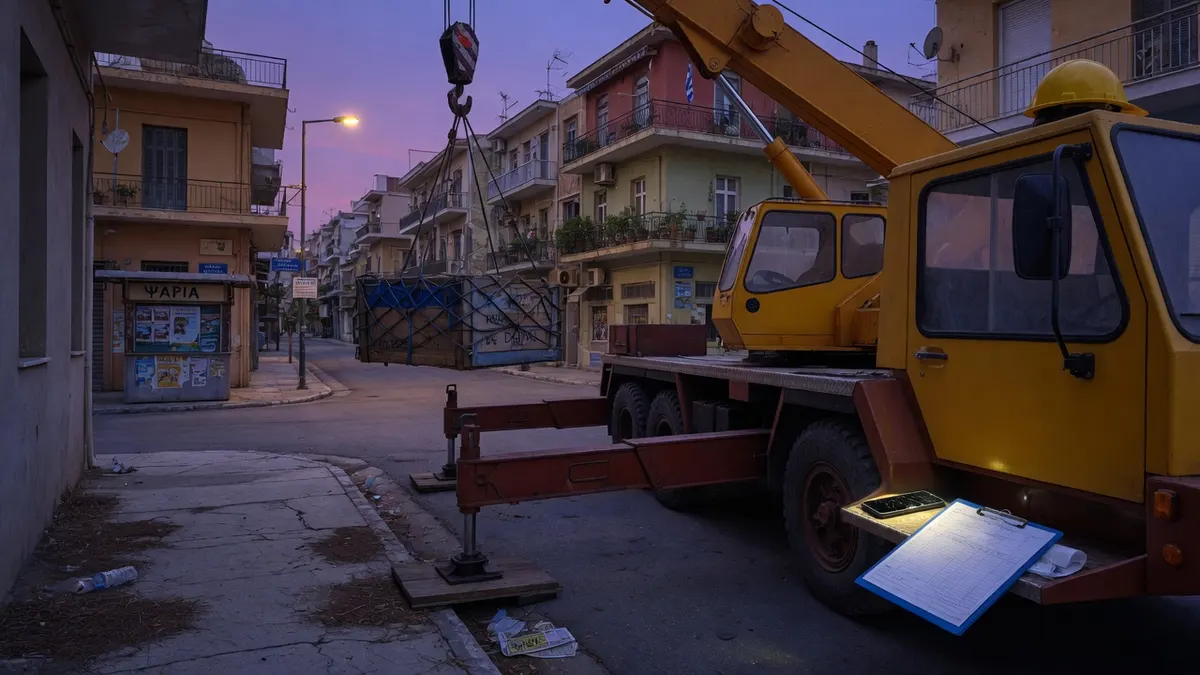
Multilingual phone reception for crane hire
Quick summary
- A published Greek number already takes English, German, Russian and French in the same week of window lifts.
- The assistant hears the language on the first sentence and continues in it. It covers 70+ languages, and it can switch if they mix.
- What is being lifted and which floor is still the first question. A name in English does not tell you which machine it is.
- A permit question in German is still a permit question. Fluency does not let it invent a δήμος stamp.
- The spoken rule does not change: the book has to show the machine is free. Wind is yours to call.
- The confirmation SMS goes out in the language of the call, with the permit reminder for that hire.
TL;DR
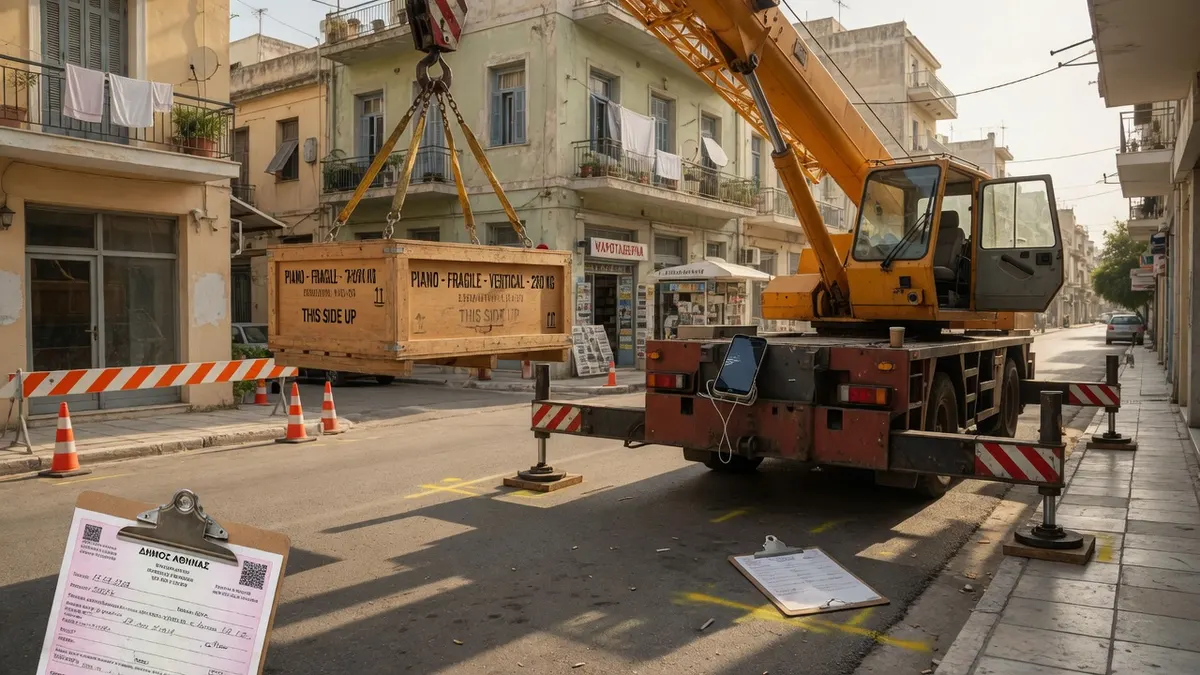
The crane is on a piano when an owner rings in English about a jacuzzi onto a terrace, or a family rings in German about a piano out a window. They want this afternoon. They will not wait for the colleague who is comfortable in English to come off the tag line. An assistant answers in the language it hears — 70+ languages, and it can switch if they mix Greek and English on the same call. It asks what is being lifted and which floor first, takes whether a permit is in, holds hours only if the machine is free, and refuses anything that sounds like this afternoon from a hope, a stamped permit, or wind-is-fine. It will not read a Greek hire sheet aloud and tell them what four hours cost.
Key takeaways
- Leave language detection on. Pinning the line to Greek is how the 09:40 English villa call never reaches you.
- Put the lift-and-floor question in every language you actually hear, not only the two you staff.
- Write the callback sentence once and never vary it: the book has to show the machine is free. A permit is not a guess.
- Do not let it explain a Greek permit, name hours, or say the wind is fine because they asked in English.
- Send the SMS in the language of the conversation, with the permit and street list for that type.
- Read the first multilingual transcripts with the yard. That is where a soft this-afternoon creeps in.
The number is Greek. The piano often is not.
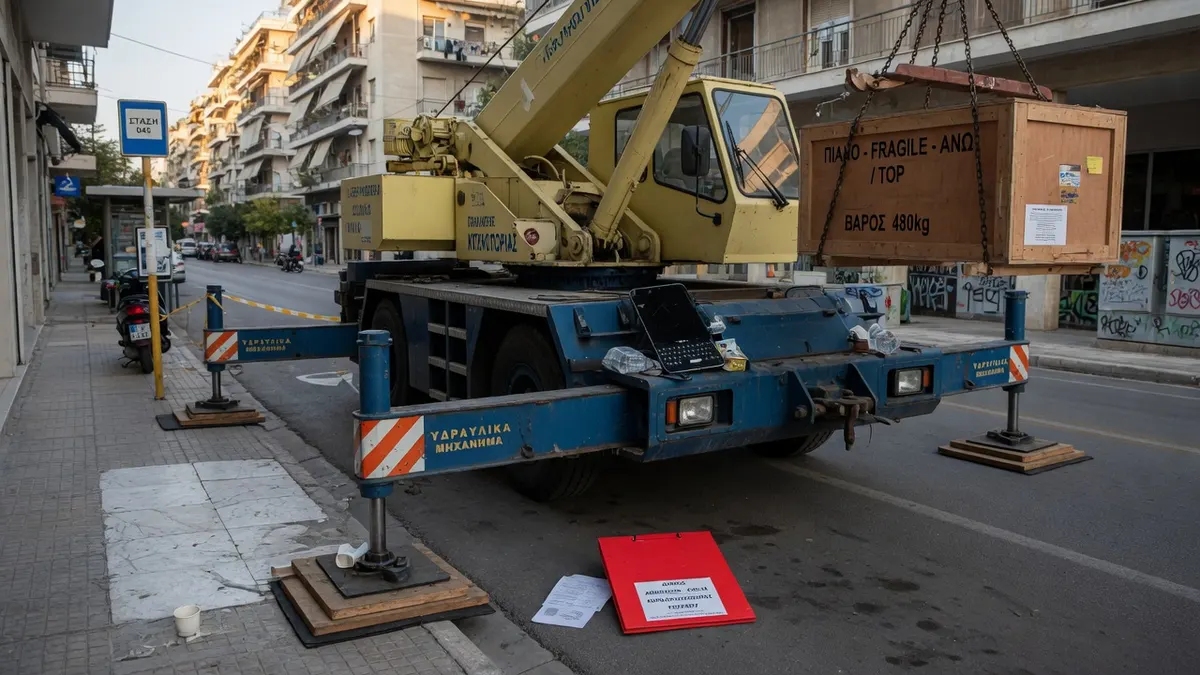
The crane is at a third-floor window. The yard phone rings. The first sentence is English. Or German. The colleague who can answer in that language is on the tag line. You cannot leave the cab.
The villa owner has two yards in the same search. The jacuzzi is on a truck. They will not wait for a callback in Greek. They hang up.
The assistant hears the language on the first sentence and continues in it. 70+ languages. If they mix — “άδεια” then the rest in English — it can switch. The rule does not switch. What is being lifted, which floor, permit in or not. Then hours the book can honour. Then the refusal: no this-afternoon from a hope, no stamped permit, no wind-is-fine.
A fluent “we can do four o’clock” in English is a morning you now own. Fluency is not a second crane.
Villas, a German piano, a mixed street
August is villas. Owners ring from another country, or from a house they have just opened, about a jacuzzi, a slab, a condenser. The window is a week. If the first voice cannot continue in English, that week goes to another yard.
A family who work in German still have a piano on a landing. They will not leave a Greek message. They will try the next card.
A mixed call is common. The street is in Greek. The rest is English. The assistant keeps both, and keeps the split. A mixed call is not a reason to invent hours.
Russian on this line is often a resident with a terrace, not a tourist. Same jobs. Same refusal.
What language does not change
It does not change the book. The machine is on a piano or it is not, whether they asked in English. The assistant still does not invent this afternoon.
It does not change the permit. A δήμος stamp is a δήμος stamp. The assistant still does not say it will be fine, and it does not tell them how to file, in any language.
It does not change the wind. Hours of a crane in wind are yours to call.
It does not change August. Do not hold hours in a week the machines are on the island, even if the owner is only here that week. Offer the window you actually have, in their language.
The SMS follows the call. An English booking gets an English text with the permit reminder. A confirmation in the wrong language is how they miss the morning and park on the outrigger pads.
A hire sheet in their language is still a tariff
The temptation on this line is to be helpful. They asked in English. You know a round figure for four hours. The assistant does not give it.
A Greek hire sheet read aloud in English is still a tariff. Do not put one in the notes. It will read the sheet out.
“Can we skip the permit?” in German is still a permit question. Name the topic. Refuse the skip. Take whether a stamp is in.
If only one of you can take the look in English, mark that person’s mornings. Reception in 70+ languages is not a promise that the person in the cab speaks English.
What you set first
Leave detection on. Write the lift question, the permit question, and the no-this-afternoon sentence so they exist in every language you hear. Mark whether you pack. Send the SMS in the language of the call. Read the first transcripts. That is where a soft “four o’clock” creeps in.
Rates live on the pricing section of the home page. They are not repeated here.
Who hangs up when the first sentence is not Greek
The villa owner has a week in Greece and three yards in a search they opened in English. If the first voice cannot continue, they are gone in twenty seconds. They do not leave a Greek message.
The German family have a piano on the landing and a moving truck. They will try the next card. They will not dictate a window lift onto a voicemail in a language they do not use for work.
The resident who opened in English about a terrace, then gave the street in Greek, will also go if the line stays in Greek and talks over them. A mixed call is still their call.
None of those three is in the voicemail you open after the piano is on the truck. The voicemail is the Greek hours already in the book. The new lift is a short ring in the provider’s log.
The hire is still hours of a machine
Booking in English does not put a second crane in the street. It does not stamp a permit. It does not make the wind drop. Say that in their language, then look at the book.
If they will only be here until Sunday, that is a window, not a promise the jacuzzi goes up this afternoon. The assistant holds hours in that window if the machine is free and a permit is in. The lift stays yours, after the book.
A piano already half out of the window is still a transfer, in any language. The assistant collects a name and a number while it is connecting. It does not tell them, in fluent English, to skip the permit.
What these calls sound like
The order is the language they started in, then the lift, then the floor, then the permit, then hours, then the refusal. There is no “four o’clock” in English over a machine that is on a piano. There is no “the permit will be fine” in German. There is no Greek SMS after an English booking.
If the assistant is fluent and still promises the crane, you own that morning in a language you may not read until the transcript. Put the villa terrace at 11:10 on a request against the book, not on hours the crane does not have.
AI receptionist, in-house staff, or a call centre
| CITT | In-house | Call centre | |
|---|---|---|---|
| Answers in the caller's language | 70+ languages, heard on the line | One or two | Whatever was staffed |
| Switches mid-call | Yes | Rarely | Transfer, if someone exists |
| Asks what is being lifted and which floor first | Same question in every language | If they remember | Often jumps to what morning |
| Invents a permit because they asked in English | Never — the δήμος stamps it | Tempted to | Tempted to |
| SMS in the language of the call | Yes | If they type it | Sometimes |
| Transcript the yard can use | Caller's words, language noted | A paraphrase | A short note, often in Greek |
What a month of unanswered English lift calls costs a small yard
Worked from these assumptions — change any of them and the answer changes:
- About 70 inbound calls a month, two machines.
- This example treats 10 of those as callers who open in a language nobody at the yard speaks in that hour.
- Of those 10, 5 hang up, or ask to be called back by someone who speaks English and then do not answer.
- 3 of the 5 were new window lifts or terrace jobs — a villa jacuzzi, or a piano in a rented flat.
- A window lift that becomes a booked morning is worth about €1,100 of hire — put your own figure in, not ours.
- 3 new lifts never reach the yard, because the first half-minute had no shared language.
- 3 × €1,100 = €3,300 of hire in one month.
- Over 10 working months — 10 × €3,300.
About €33,000 a year, from the first sentence of the call.
What it costs
CITT is pay as you go: no packages, no minimum, no contract. The current rates — the monthly fee per number and the per-minute rate — are on the pricing section of the home page, which is the only place they are published.
Frequently asked questions
Do we have to set up each language ourselves?
No. The assistant recognises the language from the first sentence and continues in it, including switching mid-call if the caller changes. What you set are the facts of the yard — what is being lifted, the floor, the permit question, the no-this-afternoon sentence — so those facts are there whatever language arrived.
Can it explain a Greek street permit to someone who does not read Greek?
No, and you should refuse any system that will try. Explaining how to file at the δήμος is not reception, and saying the stamp will come is a promise you do not own. It asks whether a permit is already in, books a look or holds hours if the machine is free, and does not tell them how to file.
What if the caller mixes Greek and another language?
That is common on this line, especially with streets and “άδεια”. The assistant can switch mid-call. The lift question and the no-hours sentence stay in force in both languages. A mixed call is not a reason to drop the rule.
Will the SMS go out in Greek to someone who spoke English?
It should go out in the language of the conversation. That is a setting, not a hope. Hours confirmation in the wrong language is how a villa owner misses the morning and decides the yard cannot handle them.
Does an answer in English mean the operator will speak English?
No. Reception in 70+ languages is not a hire conversation in 70+ languages, and it is not a promise that the person in the cab speaks English unless you have marked that. It gets the caller to hours they can hold. The lift is still yours.
Is the transcript usable if the call was not in Greek?
You get the caller's words, a summary, and a note of the language. That is more usable than a Greek paraphrase written from memory between two streets. A yard who needs a full written translation of a long call still commissions one. They are not starting from nothing.